

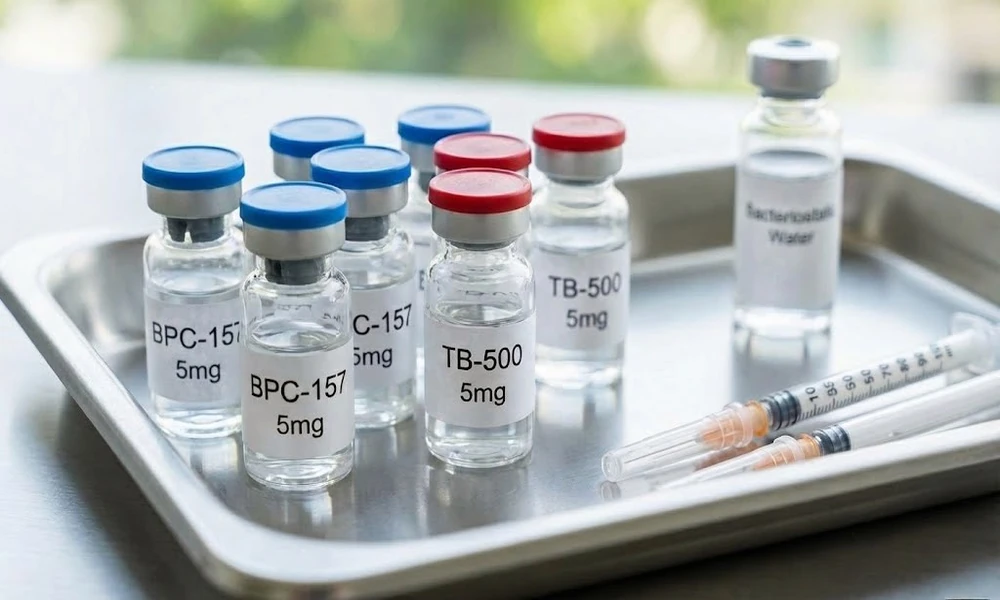

Women accumulate lean muscle through a hormonal environment that works differently from the one described in most general training literature. Lower baseline testosterone, estrogen-driven protein synthesis variation across the cycle, and a distinct fat-to-muscle distribution pattern all factor into how lean tissue develops. The best peptides for female muscle growth research reflect this: the compounds getting attention in female studies are not simply the same as those studied in men, but are applied to a different subject pool. Several of them target mechanisms that only become relevant once female physiology is treated as the primary variable.
What does Tesamorelin target?
Tesamorelin is a GHRH analogue, but its research profile sits closer to body composition work than general anabolic literature. It was studied extensively in populations where visceral fat accumulation and lean mass ratio were the primary outcomes. For women, the relevant part is how it stimulates GH pulse amplitude through the GHRH receptor without touching ghrelin or cortisol pathways, which keeps the hormonal footprint narrow.
What has shown up in female subject data is a gradual shift in lean mass to fat mass ratio over extended use periods rather than acute muscle gain. That distinction matters because lean muscle building in women often works through preservation and redistribution as much as direct hypertrophy. Tesamorelin’s position in this research comes from its consistent documentation of those composition changes rather than from direct muscle fibre growth claims.
How does AOD-9604 work?
AOD-9604 is a fragment of the HGH molecule, taken from the region associated with fat metabolism rather than the growth-promoting portion. Liposomal therapy activates fat breakdown without causing insulin resistance that full GH administration can produce. That makes it relevant in lean muscle research for women because subcutaneous fat distribution in female physiology directly affects how lean tissue presents and functions.
Female athletes and bodybuilders working on body composition during preparation phases have appeared in AOD-9604 literature as a relevant population. The compound does not stimulate muscle protein synthesis directly. Its presence in lean muscle research is more about creating the metabolic conditions where lean tissue becomes more prominent as fat tissue reduces, while avoiding the hormonal disruption that broader GH compounds tend to carry with them.
IGF-1 LR3 lean mass data
Lean mass outcomes associated with IGF-1 LR3 in female subjects come through three documented pathways in the research literature.
- Nitrogen retention – several protocols recorded improved nitrogen balance in female subjects during IGF-1 LR3 observation periods, reflecting a net anabolic state at the tissue level rather than elevated hormone markers.
- Amino acid uptake – muscle cell uptake of available amino acids showed increases in study designs where female subjects were also performing resistance-type stimulus protocols alongside compound administration.
- Satellite cell activation – localised muscle repair signalling, particularly following mechanical loading, was documented as elevated during IGF-1 LR3 periods in exercise physiology research focused on female tissue response.
MOTS-c metabolic action
MOTS-c does not belong to the GH axis at all. It is mitochondria-derived, which immediately separates it from most peptides appearing in muscle growth literature. The AMPK pathway manages muscle energy sensing and fuel selection during physical output.
For women building lean muscle, the metabolic side of training is not separate from the structural side. How efficiently muscle tissue uses glucose and fatty acids during a session determines how much of the mechanical stimulus actually converts into tissue adaptation rather than fatigue. MOTS-c research in female subjects has documented reduced metabolic fatigue markers and improved energy substrate regulation during exercise, with lean mass outcomes tracked across several studies over recent years. The data is still developing, but its trajectory within female exercise metabolism research has been consistent enough to draw serious scientific attention.

Lean muscle building in women and the peptides behind it
