

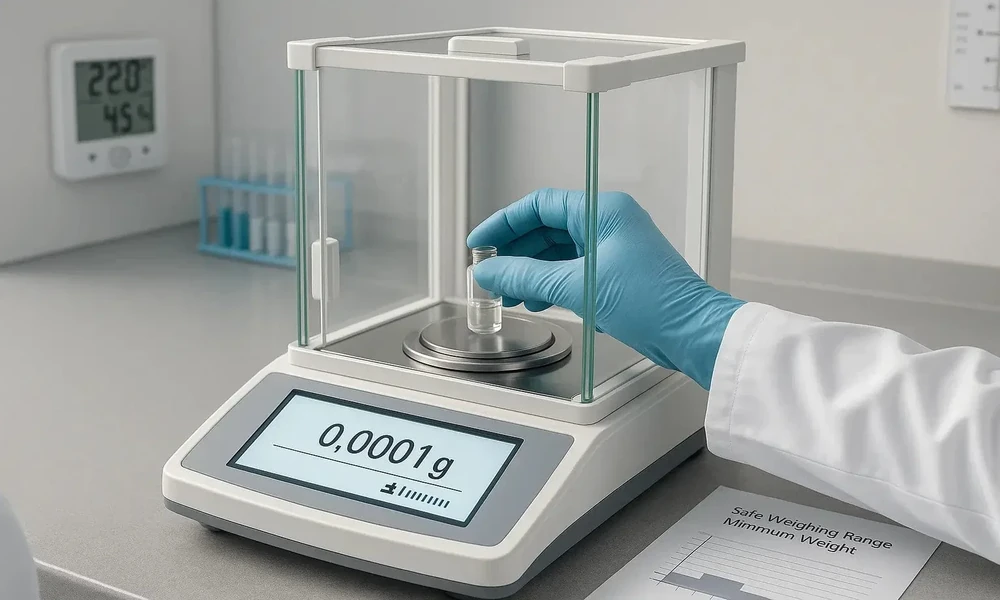

The analytical balance and laboratory balance scale are among the most fundamental instruments in any scientific laboratory, and their performance – accuracy, precision, readability, and operating stability – directly determines the quality of the measurements on which experimental results, quality control decisions, and regulatory submissions depend. A digital balance for laboratory use represents a significant instrument investment whose specification must be matched to the actual measurement requirements of the applications it serves, since over-specification wastes resources while under-specification compromises measurement quality. Lab Chemicals Suppliers in India who provide quality balances alongside their reagent portfolio offer laboratories the convenience of single-supplier procurement for both chemicals and the instruments used to measure them.
Understanding Analytical Balance Specifications
A lab analytical balance is characterised by several specifications whose relationship determines its suitability for specific applications:
- Readability (d): the smallest increment displayed by the balance, typically 0.1 mg (0.0001 g) for a standard analytical balance and 0.01 mg (0.00001 g) for a semi-microbalance. Readability does not equal accuracy – it is the display resolution, not a guarantee of measurement accuracy
- Repeatability (standard deviation): the agreement between successive weighings of the same load under the same conditions. A laboratory analytical balance with excellent repeatability produces the same reading consistently, which is more important than readability alone for most analytical applications
- Linearity: the maximum deviation of the balance’s reading from the expected value across the full weighing range. A balance might be accurate at its calibration point but deviate significantly at other loads if linearity is poor
- Capacity: the maximum load the balance can weigh without damage or performance degradation. Analytical balances typically have capacities of 80 g to 320 g, a range that suits most analytical weighing applications but may be insufficient for preparative work requiring larger quantities
Calibrating Analytical Balance: Why Regular Calibration Matters
Calibrating analytical balance instruments is a regulatory requirement in GLP, GMP, and ISO 17025 accredited laboratory environments, and a practical necessity for any laboratory whose measurements must be traceable to national or international measurement standards. The calibration process:
- Verifies that the balance’s reading agrees with certified reference weights at multiple points across the balance’s operational range
- Identifies any drift in the balance’s accuracy since the previous calibration, allowing the laboratory to assess whether measurements taken since the last calibration are affected
- Documents the balance’s performance in calibration records that demonstrate measurement traceability for regulatory inspection and quality audit purposes
- Internal calibration functions in many modern digital balance for laboratory instruments use a built-in motorised weight to perform self-calibration when triggered by the operator or automatically in response to temperature change, but internal calibration does not substitute for periodic external calibration with certified reference weights
Weighing Balance for Laboratory: Selecting the Right Instrument
Selecting the right weighing balance for laboratory applications requires matching the instrument’s specification to the specific measurement tasks it will perform:
- For quantitative analytical work involving small quantities of high-potency APIs, reference standards, or reagents: a laboratory analytical balance with 0.1 mg readability and excellent repeatability is appropriate
- For preparative chemistry involving quantities above 100 g: a precision balance with 1 mg readability and higher capacity serves better than a full analytical balance whose performance advantage at low loads is irrelevant at preparative quantities
- For weighing in fume hoods or areas with air movement: a balance with a draught shield and anti-vibration features is essential for obtaining stable readings in disturbed conditions
“A laboratory analytical balance and digital balance for laboratory use whose specification is matched to the measurement requirements of the application, correctly calibrated and maintained, provides the measurement foundation that accurate and reproducible laboratory work requires. Calibrating analytical balance instruments on the schedule required by the laboratory’s quality management system protects the integrity of every result that depends on balance measurements.
Lab Chemicals, a leading Lab Chemicals Supplier in India, provides analytical balances, laboratory balance scales, digital balances for laboratory use, and lab analytical balance instruments alongside a comprehensive range of laboratory chemicals and reagents. Lab Chemicals’ balance range serves the full spectrum of laboratory measurement requirements, with the supplier expertise and after-sales support that quality laboratory instrument procurement requires.”

